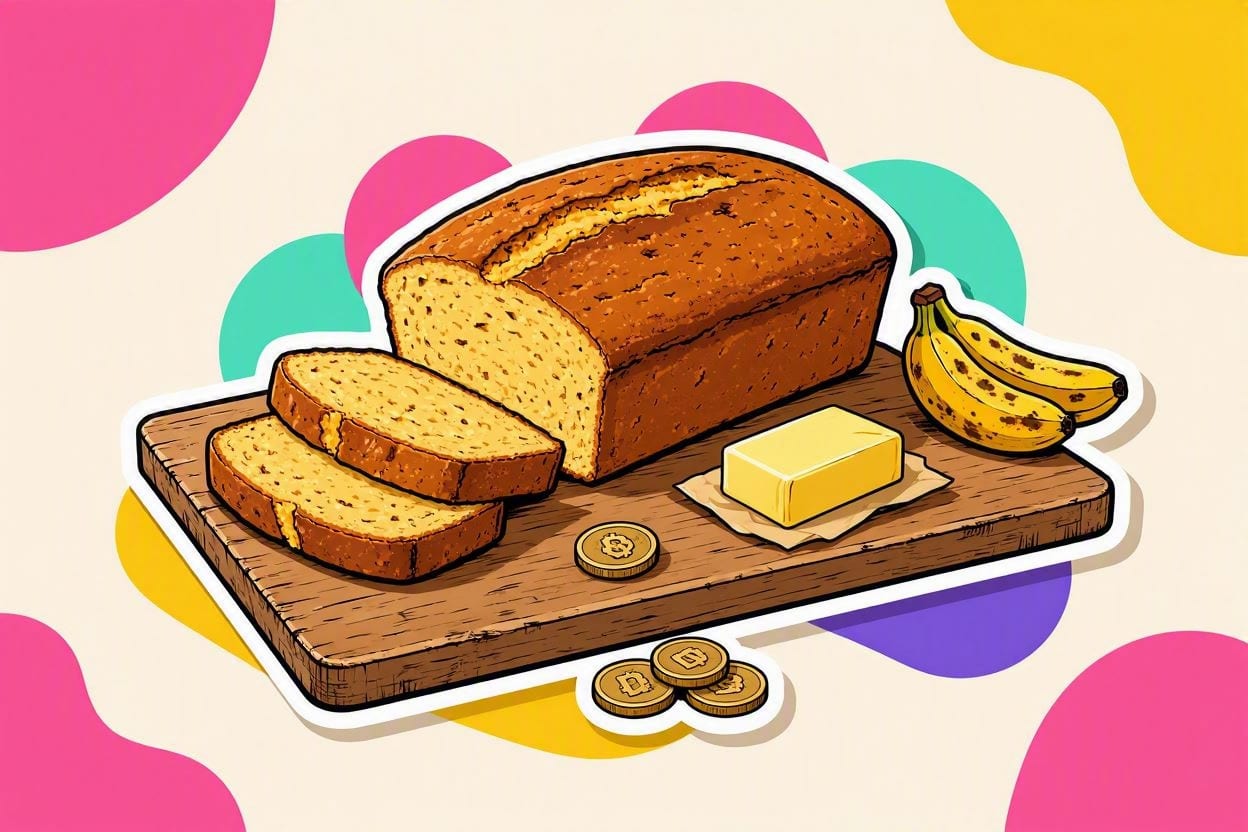
For a full-size homemade banana bread loaf made with real butter, charge ₱450–550. If you’re selling a butter loaf at ₱250, you are almost certainly paying for the privilege of baking it. Here’s the breakdown that shows why — and the levers that make a lower price honest instead of costly.
Banana bread is the classic underpriced bake. The star ingredient is nearly free — overripe bananas are the cheapest thing at the palengke — so the whole loaf feels like it should be cheap. But bananas aren’t what it costs you.
What a loaf of banana bread really costs
Here’s a standard 9×5 loaf, the butter version people come back for:
| Ingredient | Used | Cost |
|---|---|---|
| Ripe bananas | 400 g (~4) | ₱32 |
| Butter | 100 g | ₱80 |
| All-purpose flour | 250 g | ₱18 |
| Brown sugar | 180 g | ₱16 |
| Eggs | 2 pcs | ₱18 |
| Fresh milk | 60 ml | ₱7 |
| Baking soda, salt, vanilla | — | ₱8 |
| Ingredient cost | ₱179 |
Look at the shape of that table: the bananas are 18% of the cost and the butter is 45%. The ingredient everyone thinks of is the cheapest thing in the loaf. That mismatch is exactly why banana bread gets mispriced.
Then the loaf meets your hour
One loaf takes about an hour of real work — mashing, mixing, the bake itself, cooling, wrapping. At ₱150/hour, that hour costs more than every ingredient combined. Add packaging (loaf box, liner, label: ₱35) and overhead (a long slow bake: ₱40), and a single loaf baked alone looks like this:
| Line | One loaf, baked alone |
|---|---|
| Ingredients | ₱179 |
| Packaging | ₱35 |
| Labor (1 hr) | ₱150 |
| Overhead | ₱40 |
| Total cost | ₱404 |
| ÷ (1 − 0.35) | ÷ 0.65 |
| Charge | ≈ ₱620 |
₱620 for banana bread is a hard sell in most markets — and that’s the real lesson. Banana bread baked one loaf at a time barely works as a business. The fix isn’t cutting your wage to zero. It’s baking in batches.
Batch baking is the whole trick
Four loaves don’t take four hours. You mash once, mix one big bowl, and fill four pans — call it 2.5 hours total, and the oven runs once. Costs that are per-batch rather than per-loaf get divided by four:
| Line | Per loaf (batch of 4) |
|---|---|
| Ingredients | ₱179 |
| Packaging | ₱35 |
| Labor (2.5 hrs ÷ 4) | ₱94 |
| Overhead (shared bake) | ₱30 |
| Total cost | ₱338 |
| ÷ (1 − 0.35) | ÷ 0.65 |
| Charge | ≈ ₱520 |
Round to ₱500–550 a loaf and you have a price that pays you properly and can actually sell. Same recipe, same margin — the only thing that changed is that you stopped baking one at a time.
When labor is the biggest line, batch size is your pricing strategy. Banana bread, cookies, pandesal, muffins — they only work when one session produces many units. Take pre-orders and bake on set days rather than on demand.
So how do people sell it at ₱250?
Three honest explanations, and it’s worth knowing which one you’re looking at:
- It’s a smaller loaf. A ₱250 loaf is often half the size of a full 9×5. Compare grams, not names.
- It’s oil-based, not butter-based. Swapping butter for oil cuts the biggest cost line by more than half — a legitimate recipe choice, and a genuinely different product.
- Nobody is paying the baker. The most common reason. The loaf covers ingredients, the hours are free, and it feels like profit until you count.
If you want a lower price point, pick lever one or two deliberately — a smaller loaf or an oil recipe, priced to still earn. Don’t pick lever three by accident.
Where the margin actually is
- Mini loaves. Four minis from one batch sell for more in total than one big loaf, and they’re giftable — a real premium format, not a discount.
- Add-ons priced properly. Walnuts, chocolate chips, or a streusel top add ₱40–80 in cost. Add ₱100–150 to the price, not ₱0.
- Standing orders. A weekly loaf for the same customer is the cheapest sale you’ll ever make — no new conversation, and it slots into an existing batch.
- Free bananas aren’t free. Overripe bananas from your own kitchen still have a market value. Cost them, or you’ll misjudge the loaf the day you have to buy them.
OvenSync costs every recipe from the real prices you log, updates the cost when an ingredient gets more expensive, and shows your profit on every order. Start free → — no card, 30-day Baker trial.
Banana bread earns when you treat it as a batch product with a real wage inside it. Bake on set days, take pre-orders, price the butter version like the premium loaf it is — and let the cheap ingredient stay a happy coincidence instead of a reason to undercharge yourself. For the full method behind these numbers, see how to price your home-baked goods.